
Search Is Changing Faster Than Ever
For years, businesses have focused on ranking at the top of search engine results. The formula was simple: optimize your website, publish valuable content, build backlinks, and improve your Google rankings.
Today, the landscape is evolving.
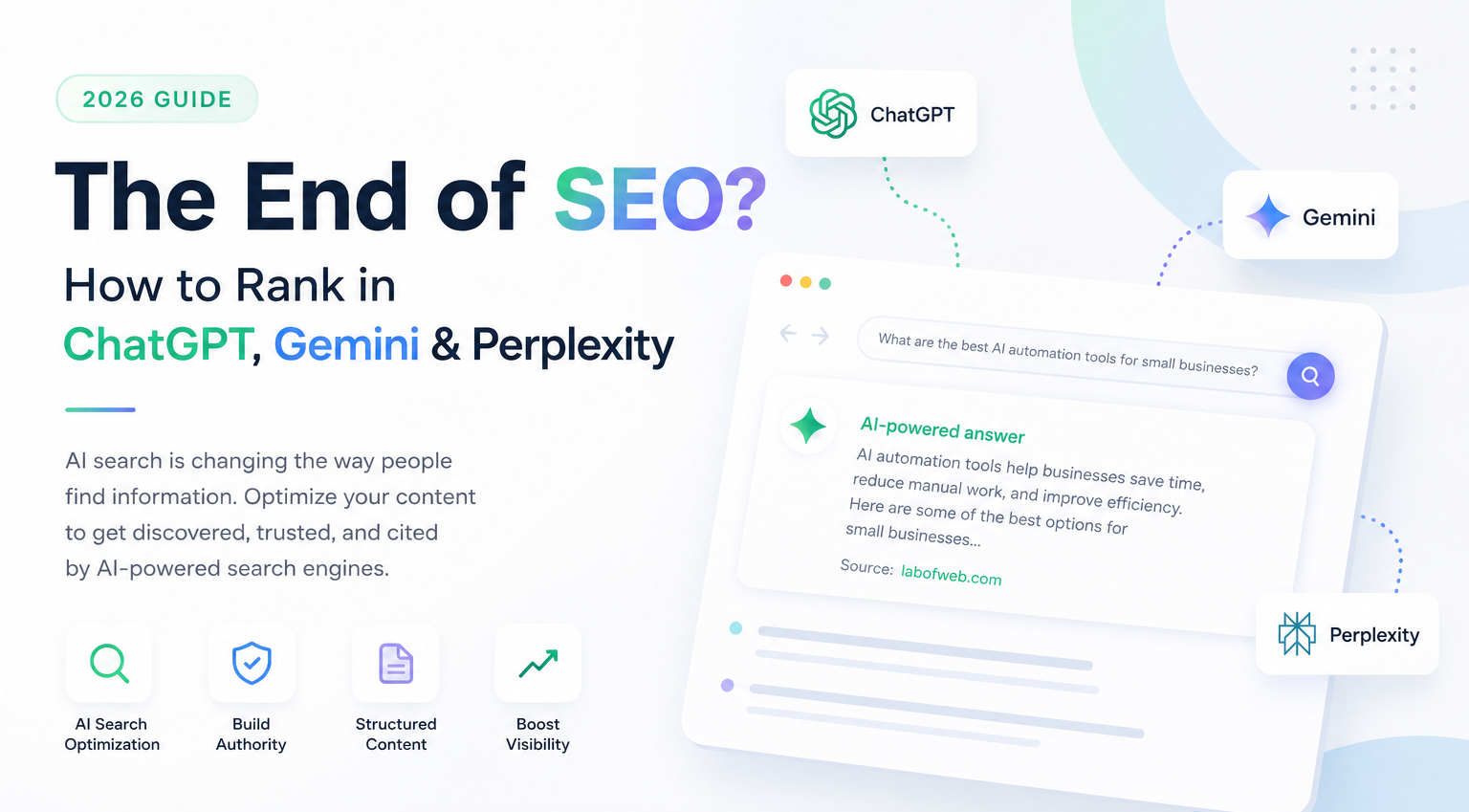
Millions of users are now asking questions directly to AI assistants like ChatGPT, Gemini, Perplexity, and Copilot instead of typing keywords into a search engine. Rather than showing a list of ten blue links, these platforms generate direct answers by combining information from multiple trusted sources.
This shift means businesses need to think beyond traditional SEO. Success now depends on whether AI systems can understand, trust, and reference your content.
7 Ways to Make Your Website AI-Friendly
1. Write for Questions, Not Just Keywords
Instead of targeting:
AI Automation
Create content like:
- What is AI Automation?
- How does AI Automation work?
- Is AI Automation suitable for small businesses?
- AI Automation examples
This mirrors how people naturally interact with AI assistants.
2. Build Topical Authority
Rather than publishing random blog posts, create a comprehensive content hub.
For example:
AI Automation
- AI Basics
- Workflow Automation
- AI Agents
- AI Chatbots
- AI Integration
- AI Security
- AI Case Studies
The more complete your coverage, the more likely AI systems are to recognize your expertise.
3. Use Structured Data
Schema markup helps AI understand your content.
Useful schema types include:
- FAQ
- Article
- Organization
- Product
- Review
- How-To
Structured data improves machine readability and increases the chances of your content being surfaced in AI-powered experiences.
4. Publish Original Insights
AI models value unique information.
Consider sharing:
- Original research
- Case studies
- Customer success stories
- Performance metrics
- Industry surveys
Original content is harder to replicate and more likely to be referenced.
5. Improve Content Structure
AI systems process well-organized content more effectively.
Use:
- Clear headings (H2, H3)
- Bullet points
- Tables
- Numbered lists
- Concise paragraphs
A logical structure benefits both readers and AI models.
6. Demonstrate Expertise
Include elements that establish credibility:
- Author biographies
- Company information
- Certifications
- Client testimonials
- Real project examples
Trust signals help both users and AI systems evaluate the reliability of your content.
7. Keep Content Fresh
Artificial intelligence evolves rapidly.
Regularly update:
- Statistics
- Screenshots
- Product comparisons
- Tool recommendations
- Industry trends
Fresh content is more likely to remain relevant in AI-generated answers.
The Future of Search
SEO is not disappearing—it is evolving.
Businesses that combine strong technical SEO with authoritative, helpful content and AI-friendly structure will be better positioned for the future of search.
The goal is no longer just to rank on a search engine results page. It's to become a trusted source that AI assistants reference when answering users' questions.
Final Thoughts
AI-powered search is transforming how people discover information. By focusing on quality, expertise, and user intent, businesses can improve their visibility across both traditional search engines and AI assistants.
The companies that adapt today will be the ones users—and AI—turn to tomorrow.
Ready to Elevate Your Digital Operations?
Whether you need custom ERP solutions, web & mobile applications, or sustainability management, our expert team is here to help you scale efficiently.