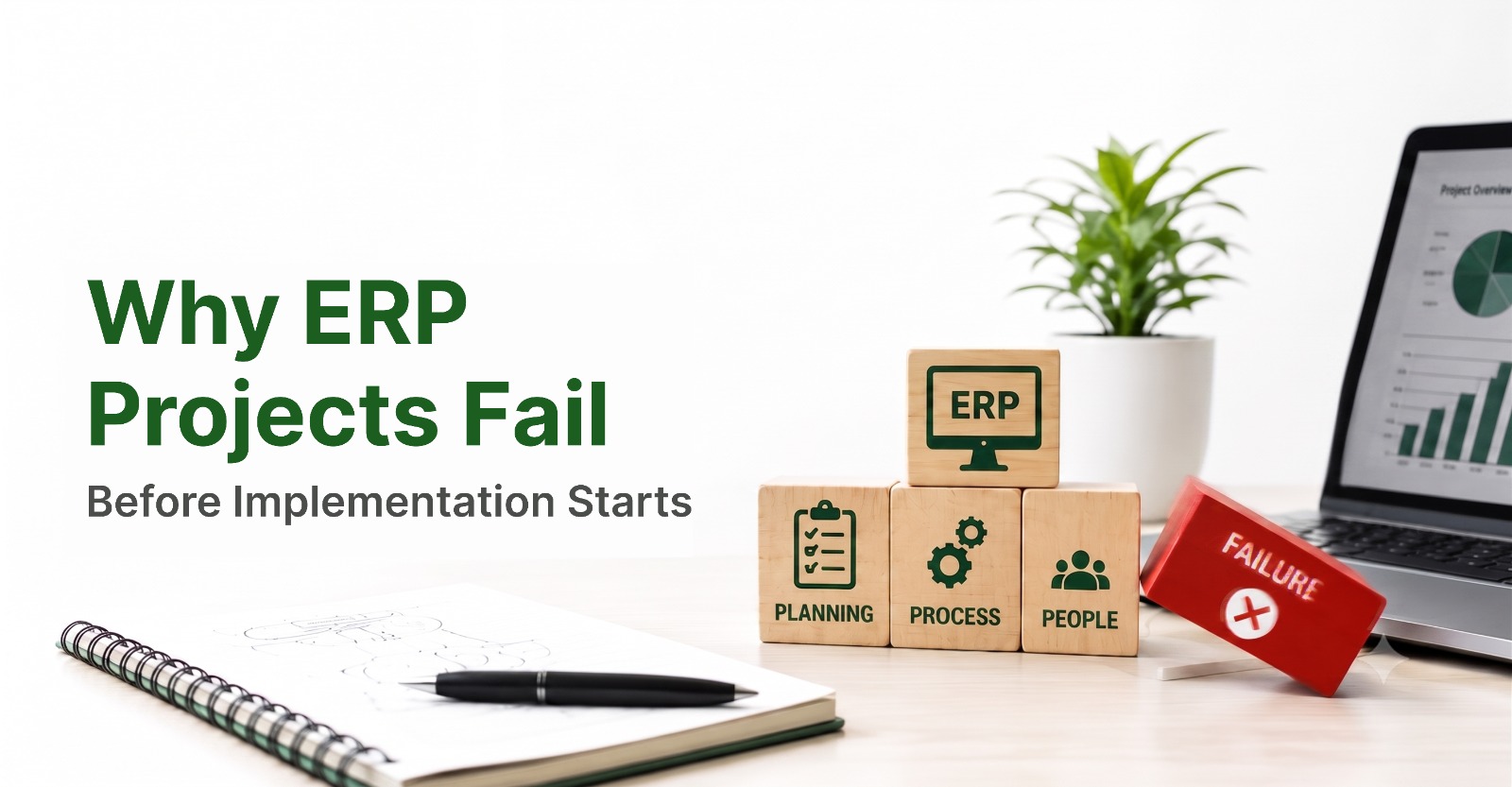
Why ERP Projects Fail Before Implementation Starts
Most people think ERP projects fail during implementation when timelines slip, budgets increase, or users resist change.
The reality is different.
Many ERP projects are already on the path to failure before the first line of configuration is completed. The root causes usually lie in poor planning, unclear business goals, and inadequate preparation not in the ERP software itself.
At LABOFWEB, we've observed that successful ERP implementations begin long before the project kickoff. They start with understanding the business.
1. No Clear Business Objectives
One of the biggest mistakes organizations make is starting an ERP project because "everyone else is doing it."
An ERP should solve specific business problems such as:
- Reducing operational costs
- Eliminating manual processes
- Improving inventory accuracy
- Accelerating financial reporting
- Enabling data-driven decision-making
Without measurable objectives, it becomes impossible to determine whether the project has succeeded.
2. Poor Requirement Gathering
Many companies focus on software demonstrations before understanding their own processes.
This often results in:
- Missing business requirements
- Overlooked operational challenges
- Excessive customization later
- Unexpected project delays
A structured requirement discovery phase helps ensure the ERP is built around the business—not the other way around.
3. Lack of Executive Ownership
ERP implementation is not just an IT initiative.
It is a business transformation project that requires active leadership from executives.
Without executive sponsorship:
- Departments work in silos
- Decisions are delayed
- Priorities constantly change
- User adoption becomes difficult
Leadership involvement keeps the project aligned with business goals.
4. Trying to Automate Broken Processes
Technology cannot fix inefficient workflows.
If existing processes are inconsistent, undocumented, or heavily manual, implementing ERP without process improvement simply digitizes the problems.
Before implementation, organizations should:
- Review existing workflows
- Eliminate unnecessary steps
- Standardize business processes
- Define clear responsibilities
A clean process leads to a cleaner ERP implementation.
5. Ignoring Change Management
Employees often worry about change.
Without proper communication and training, resistance can begin even before implementation starts.
Successful organizations involve end users early by:
- Explaining project objectives
- Gathering employee feedback
- Conducting workshops
- Preparing teams for new ways of working
People are the most important part of every ERP project.
6. Choosing Software Before Understanding Requirements
Many businesses select an ERP based on brand recognition, pricing, or attractive demonstrations.
However, the right ERP is the one that aligns with your operational need not the one with the longest feature list.
Software selection should always follow:
- Business analysis
- Process mapping
- Requirement documentation
- Vendor evaluation
This sequence significantly reduces implementation risks.
7. Unrealistic Expectations
ERP is not an instant solution.
Organizations expecting immediate ROI without investing time in planning, testing, training, and adoption often become disappointed.
ERP is a long-term investment that delivers value through continuous process improvement.
Final Thoughts
ERP failures rarely begin during implementation.
They begin when organizations skip planning, overlook business processes, fail to engage leadership, or choose software before understanding their actual needs.
The strongest ERP projects are built on a solid foundation of business analysis, process mapping, and well-defined requirements.
At LABOFWEB, we believe successful ERP implementations start with understanding the business first and technology second.
Thinking about implementing an ERP? Start by evaluating your business processes and requirements before selecting any software. A few weeks of planning can save months of rework and significantly improve your chances of project success.
Ready to Elevate Your Digital Operations?
Whether you need custom ERP solutions, web & mobile applications, or sustainability management, our expert team is here to help you scale efficiently.