


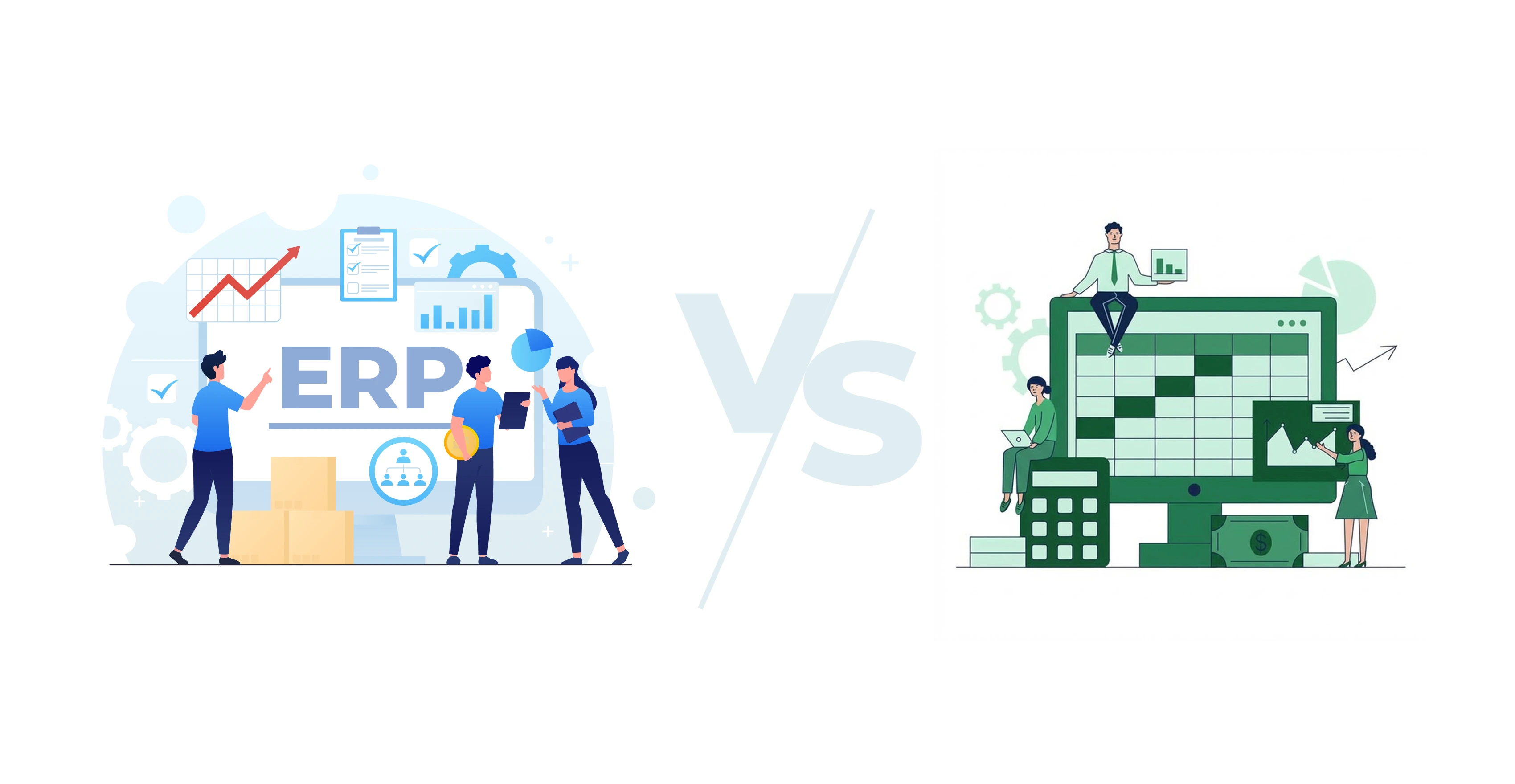
Why SMEs Must Move from Excel to ERP in 2026
In the early stages of a business, Excel works perfectly fine.
It is flexible, affordable, and easy to use.
But as your business grows, Excel slowly becomes a silent bottleneck.
In 2026, SMEs are no longer competing only with local players. They are competing with automated, data-driven, system-driven businesses.
If your operations still depend heavily on spreadsheets, it may be time to rethink your foundation.
1. Growth Creates Complexity — Excel Doesn’t Handle Complexity Well
When your business grows, transactions, customers, vendors, employees, compliance requirements, and data volume increase significantly. Excel is a calculation tool — not a centralized management system. ERP connects sales, purchase, inventory, accounts, payroll, and operations into one structured workflow
2. Real-Time Visibility is No Longer Optional
Modern decision-making requires live sales reports, real-time stock positions, receivables, payables, and cashflow projections. Excel relies on manual updates and delayed reporting. ERP systems provide instant dashboards and real-time visibility for management clarity.
3. Risk of Data Errors & Dependency on Individuals
Multiple file versions, unnoticed formula errors, and accidental overwriting are common in spreadsheet systems. Businesses often depend heavily on one or two employees. ERP reduces this risk through structured workflows and role-based access control.
4. Compliance & Taxation Are Becoming More Structured
Governments are moving toward digital compliance, e-invoicing, GST/VAT integration, and automated tax reconciliation. Manual systems increase compliance risk. ERP ensures standardized invoicing, proper tax calculations, audit-ready reports, and accurate financial statements.
5. Cashflow Management Requires Structured Tracking
Many SMEs are profitable but struggle with liquidity. This happens due to weak receivable tracking, poor payable planning, and inventory blocking cash. ERP enables ageing analysis, inflow vs outflow tracking, budgeting, and project profitability visibility.
6. Scalability Matters
If your goal is expansion — new branches, new products, larger teams — Excel will eventually collapse under pressure. ERP supports multi-location inventory, multi-company accounting, CRM integration, project tracking, and structured approval workflows.
When Should an SME Move to ERP?
You should consider ERP if your turnover crosses 1–2 Cr, you have more than 5–10 employees, you struggle to get consolidated reports, or you depend on disconnected tools.
Final Thoughts
Excel is a powerful tool. But it is not a business management system. SMEs that want operational clarity, financial control, compliance confidence, and scalable growth must transition toward structured ERP solutions. Digital transformation begins with process clarity and system discipline
About LABOFWEB Technologies
LABOFWEB Technologies helps growing businesses transition from scattered spreadsheets to structured ERP systems with strategic implementation, customization, and long-term support.
Ready to streamline your business? Let’s talk!